
31 Oct
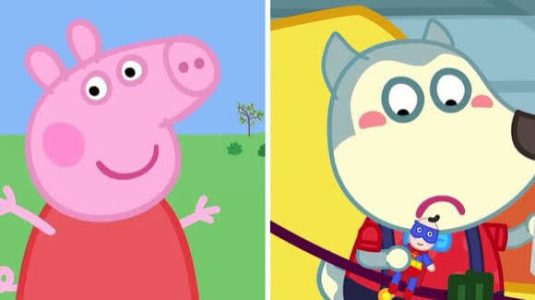
Hooray! for Peppa Pig
Hasbro, the owners of Peppa Pig, have won their copyright infringement case against the creators of Wolfoo.In proceedings brought by Hasbro in the London High court, Hasbro claimed that the Wolfoo character used the audio of Peppa Pig in certain words and expressions such as “hooray!” They also claimed that Wolfoo’s appearance and artwork were similar to Peppa Pig’s design, but the legal case focused on the audio because it was considered the easiest mechanism to prove copyright infringement.
Wolfoo, created by SConnect a Vietnamese-based company, is an animated series starring a young wolf who lives with his family. It has hundreds of millions of views online across channels including YouTube, YouTube Kids and the official Wolfoo World website and is aimed at viewers aged between 2-7 years old. SConnnect admitted that the Wolfoo videos made before mid-2020 contained audio from Peppa Pig but that an independent third-party contractor had used these sounds without their knowledge and that all videos that infringed upon copyright laws had been removed. However, they agued that all videos made after this period had used original sounds that were created in-house. The High Court rejected SConnect’s claim since it was proved that Peppa Pig audio clips were used in all English language Wolfoo videos and in over 70% of the videos in a foreign language. It was also irrelevant that the Peppa Pig clips were supplied by third parties.
Clearly by using the Peppa Pig audio, SConnect had sought to deliberately deceive the young Wolfoo viewers into believing that Wolfoo and Peppa Pig were the same character.
Copyright infringement was therefore established and SConnect was ordered to take down within days all videos featuring Wolfoo from platforms including YouTube. The ruling applies in the UK, EU and all 166 member states of the World Trade Organisation (incl. USA and Vietnam).
While this is a high-profile case involving businesses with deep financial pockets, copyright affects all content creators, and this case is a reminder to anyone who posts or uses creative works without permission that the consequences can be significant financially and reputationally.
